Search This Blog

Tuesday, March 27, 2012

It was mighty cold when we arrived in Beijing. As we walked the street looking for a place for supper we came across some exotic meats and seafood that you order to be fried on a skewer.
Read the names below!

Later we witnessed a Bhuddist wedding, drazons and all! Right on the street corner.


Steamed dumplings are a popular breakfast. Somehow our stomach wasn't used to hot spicy food that early in the a.m. And no coffee to boot!

Tienanmen Square was closed because they were having meetings of the national congress. We felt pretty safe with so many policemen and soldiers around. Here are some of the people as we encoutered them.


China is not homogeneous. Although the great majority are Han, there are 55 minority groups and thirty provinces. In the National Museum we met some lovely tribal people. We couldn't communicate except through smiles and sign language.


Entrance into the Forbidden City. For years only the Royal family and courtesans could enter. Now people flood in from all over China as if to say "China belongs to us!" But always under strict guard and the watchful eye of Mao.
Foilk dancing in the national park.

We came across several signs like this one:"No naked flames." And at other places guards were collecting cigarette lighters. I can only imagine there is a fear of people protesting by setting themselves on fire.
Friends who live in Beijing met us with a Chinese driver and took us to the Great Wall which is about an hour 1/2 away. It was a beautiful day and great exercise climbing the wall. It was built after the conquest of Ghengis Khan but never had to repell and attack. It reminds us how ancient, proud and protective Chinese culture is. But no wall can keep the gospel out.


These are hutongs -the traditional neighborhoods that go back centuries. Most still don't have running water so they have free public bathrooms in every district.
Modern cars alongside a wall build before the USA was formed.
So far this might seem like a travelogue, but when we arrived in Chengdu our time was filled with appointments with Chinese church planters in homes, and eating places. We can't post pictures of the people we met on the web. Most were between 25 and 35 and came to Christ as university students. There was a terrible earthquake in Chengdu in 2008. The witness of other Chinese and aid workers led to many coming to Christ and the formation of home groups led by students and recent graduates with no theological training and few models and mentors. They read the Scriptures and prayed that the Holy Spirit would guide them. Some are "hidden Christians" today but others have found their way into existing churches or formed their own churches. This is called the "third wave." The first two being the 3-self registered churches and the house church movements that resisted registraton and underwent severe persecution between 1976 and 1989. The 3rd wave is comprised primarily of young urban professionals and students. They are seeking further training. They are pushing the limits of what the government will allow them and courageously sharing their faith. They feel that Christ is the only hope for the Chinese people and they think that many more will turn to Him. I visited one of the underground seminaries were some of the pastors and leaders were being training by Chinese in the Chinese language. I can post this picture because you can't see any faces. Students met in an apartment. They had a webinar on Hermeneutics (interpreting Scripture), went over their exercises and discussed the lesson. They were very serious about their studies and very discreet as well.
 
We learned so much but we know so little about the church in China. We could tell though that it is a beautiful church, not in prestige, buildings and degrees, but in its simplicity, devotion, and zeal to reach their nation. God reminded me of the fervor of my first love. We hope some of these church planters will be able to join other Asians this fall in Chang Mai Thailand for a Church Planting Institute. What a privilege to here their stories.

Wednesday, January 18, 2012

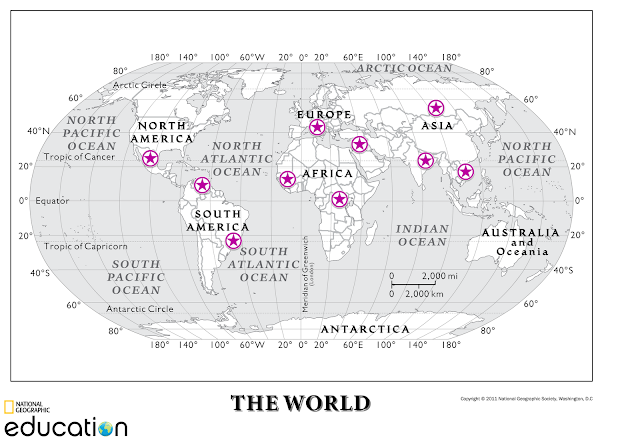
The Places Church Planter Training has been launched (indicated by a star above):

Latin America:

      - San Jose, Costa Rica in the fall of 2009
     
      The training has been reproduced in Venezuela, Brazil and in rural Costa Rica.  In Mexico City a Youth Missions movement is giving birth to new churches. In South Brazil, following teaching on church planting in 2002, we have seen four generations of church reproduction.

Africa:

      In East Africa,  ReachAfrica launched Church Multiplication Training in Gemena, Democratic Republic of Congo in August 2010. It has extended to the capital Kinshasa and to several other countries such as Congo Brazaville, Uganda, Rwanda, Burundi and Sudan.

     In the West, the same training was launched in Lome, Togo in June 2009 and in Monrovia, Liberia, in January 2011. From Monrovia it was spread to neighboring Ivory Coast and Sierra Leone. It has been translated into Portuguese for Mozambique and Angola.

 Europe:
    
     Training was laucnhed in Prague, Czech Republic in 06-2011. The leaders there are organizing for a sequel to the training and inviting people from neighboring countries.

Middle East and North Africa:

      Workers gather from four Arab-speaking nations in this Middle Eastern country that will remain unnamed. In 03-2011, the emphasis was on church planting and participants discussd how they could go from addition to multiplication. The diversity of degrees of restrictions and the political unrest stimulated great discussions. The consensus is that methodology must be adapted to the local context.


Asia:

     In February, 2001, potential trainers received training in Communist Country in SE Asia. The secret gathering was held in a hotel. No manuals or printed matreial were allowed; everything was done digitally. The training will continue in February, 2012. Plans are being made for an ongoing Church Planting Institute.
    
      A partnership was formed with a movement of about 30 churches in West Bengal. In ovember, 2011, the first installment of training was offered to lay evangelists and church planters in Kokata. Level 1 was completed and level 2 will follow in the fall of 2012

      In November, 2011, church leaders gathered in Kathmandu, Nepal to talk about how to work together to continue the church planting movement that has been growing there. They would like to see it spread all over the country. An invitation has been given to train 100 church planters from the capital region in 2012, and to prepare trainers to take the training to the outlying regions

How can you be involved?

     Details can't be published on the web. However if you would like to know how you can help these church planting movements to be strengthened through training and coaching, we invite you to consider partnering with us. Please email Gene at Matt9.38@efca.org

Monday, November 21, 2011

God sightings in Nepal, the top of the world.

 After teaching and training alone in Kolkata for four days, I took the 3 hours flight to Kathmandu, Nepal. What a joy to meet the WorldLead team from our home church in the airport. Kathmandu is in the shadows of the Himalayas, but you would never know it. The traffic and smog were terrible; motorcycle zipped around our van as we headed for a hillside hotel. It was so refreshing to be with friends from our church and to share the teaching with my pastor, Bill Mitchell and Missions director, John Lucas. We taught the same leadership development themes we had covered together in Haiti but had more time for interaction with the Awana Leaders from India, Nepal and Pakistan. The idea is to equip them so that they, in turn, will equip their teams. We had a wonderful time with this sharp group of men and women.


The people worship on Saturday in Nepal. So John and I hopped in a small taxi and were taken by a Christian woman, Meera, and her daughter to a simple church fellowship in another part of town. Along the way we saw rice fields (85% of the people are involved in agriculture) and the second industry is carpet weaving. That is what Meera and her husband did. As in India, cows roamed freely, without fear, in this predominantly Hindu country.

About 60-70 believers gathered. The women sat on the right and the men on the left with a passage way up the middle. The youth played instruments and led the singing. Even though I was told there were no women pastors, a very articulated woman led almost every that happened during the service. She was the Nepalese wife of an American missionary who had left the Mission and started a coffee business.  


On Friday, after doing a little shopping downtown, Gajendra, our Nepalese facilitator went with me to a gathering of people interested in talking about Church Planting. This wasn’t part of the “official” program, but an Indian leader from our Mission had encouraged me to build relationships and explore future training while I was there. His friend, Pastor Sonam Kabo, hosted the meeting and prepared a supper for the guests. On the way over Gajendra explained that this is God’s hour in Nepal. The first Protestant church was formed in the 1950s even though Christianity was illegal. In the 1970s, there were several hundred churches. In the 90s freedom of worship was allowed but not freedom to convert others. The country was largely closed to Christian influence from 1995-2005 because of political turmoil and a civil war between Maoists and Monarchists. Froim 1995 to 2006, during the fighting, the church grew to 10,000 churches.

I was amazed at the response to the invitation to talk about church planting. Eighteen key leaders and church planters came, not only from Kathmandu, but from all over the country. One had traveled 12 hours to be there for the 2-hour meeting. As I listened to their stories I was humbled and grateful that my friend’s suggestion was used by God to bring so many choice servants together. They shared training as their greatest need, but also mentioned the need for resources to help new initiatives. Then I shared a video on church planting movements and told about the training I had just done in Kolkata. All of a sudden the electricity went out and we were in total darkness. The pastor’s wife, Rita, came in with candles. Later I found out what an amazing lady she is. She directs a Christian school and when the Maoists came to the gate in 2004 she stood them down, arguing that their fighting was making orphans that the Christians were feeding and caring for. Rita put out a nice spread and while I ate they discussed the idea of church planter training.
Within twenty minutes they formed a steering committee and named Sonam as the coordinator. I didn’t see any vote or debate but Sonam shared that about ten groups decided to participate and that they would be developing a plan to host church planter training and deploy it to the outer regions. His suggestion was to start by training the trainers. Please pray for Sonam and the team in Kathmandu. The last thing we want is to start another group of churches. But if they can work together and come up with a feasible plan, we would love to work with them to strengthen and extend Christ’s church in Nepal by training church planters to multiply healthy churches. I don’t know where this will lead, but I believe God is in it and want to do all I can to help them move ahead together. Please pray Ephesians 3:20 for these leaders who want help training a new wave of church planters.


Monday through Wednesday we worked with the Awana leaders from Nepal, India and Bangladesh. I learned a lot about their ministries and the challenges they faced. When they found out that I was a trainer of church planters several talked to me about future training in their country. Two Bangladeshis said that they weren't aware of any Church Planting Conference in their country, although one sat on a church planting committee.  The Indian leaders from the Mombai region were also interested in learning more about church planting. They say in the USA Awana works with established churches only, but in their countries  they start Awana clubs where there are no churches. It becomes a way of making and gathering new followers of Jesus. But they need help then to organized and grow the churches.


What a joy to see them discuss the principles from the Word of God and apply them to their ministries. Would you consider helping me to return to Nepal and continue the work begun there. We are in need of regular monthly supporters. But even a one time gift would help. Please go the the "give now" button on the top left portion of this website to contribute. Or you can email us to get more information about being a ministry partner. Thank you. 

Wednesday, November 9, 2011

A lighthouse in a dark city

The name Kolkata means "abode of Kali." Kali is one of the three top gods in Hinduism. He is the destroyer. Brahma creates, Vishnu preserves and Kali destroys. That is the cycle of life. There are tens of thousands of gods added. The elephant god adorned the wall of the guest house and there were tons of little figurine gods on the door. Kalid, the guest house owner went to a Catholic school but says he doesn't believe in God. His only son is a drug addict. He gets drunk every night. I shared the hope in Jesus with him. He asked me to pray and then said: :I do beleive in God but He has abandonned me." Please pray for him and his son.
Kali being taken in the Ganges as an act of worship.

gods on gest house door
 Parts of Kolkata are flooded during the rainy season. The church reaches out to the needy. 
I was here in 2009. Purnendu Sinha invited me back to give level 1 churh multiplication training to his evangelists and church planters. They have planted 35 churches in the Eastern district which includes Kolkata, Salt Lake, West Bengal and Orissa.


What a blessing to work with these brave evangelists. They are so grateful and appreciative of the training received. They gave me a wood carving.

These two young men (in their mid-twenties) work full-time as evangelists and live on very little. They long to see unreached people know Christ, become disciples and form new lighthouses in the darkness.

Here is a lighthouse. They meet for prayer and fellowhip. I was asked to teach unexpectedly. God blessed and we had a great time in the Word. The trip took 2 days and it's been non stop since I got off the plane.

Some of the trainees came from the Brahmin class. They are powerful evangelists. They go to the slums in the name of Jesus, taking medical teams and bringing a word of hope.

Prayer and praise are the strength of these churches.

 Rev. Purnendu and his little family.
 They worked hard at their studies and made plans to multipliy disciples, leaders and churches.

 Kolkata is weher Mother Theresa had here minsitry. This is the home of the Carmelite sisters. Willima Carey also ministered in Kolkata 200 years ago.


God is at work in India! Workers are rising up.

Please pray for Purnendu and the 15 that were trained.
Now I am off to Kathmandu, Nepal. I will be there with a team from my home church. Please pray for a meeting to explore doing church planting training with Nepalese leaders. I will also be training leaders from AWANA from Bangladesh, India and Nepal. More later